CT: fast cross-sectional imaging with X-rays
CT uses X-rays to create cross-sectional images. It can show structures including lungs, bones, blood vessels and abdominal organs, and its speed can be valuable in urgent assessment. Because it uses ionizing radiation, the decision should consider the expected benefit and potential risk, not simply how advanced the scanner appears.
Ask which question the scan is intended to answer and whether contrast is needed. Tell the team about possible pregnancy, allergies and important medical conditions. Discuss concerns rather than independently cancelling a medically indicated scan or requesting repetition without a clear purpose.
Sources: [1] RadiologyInfo.org — ACR and RSNA
MRI: no ionizing radiation, but safety checks still matter
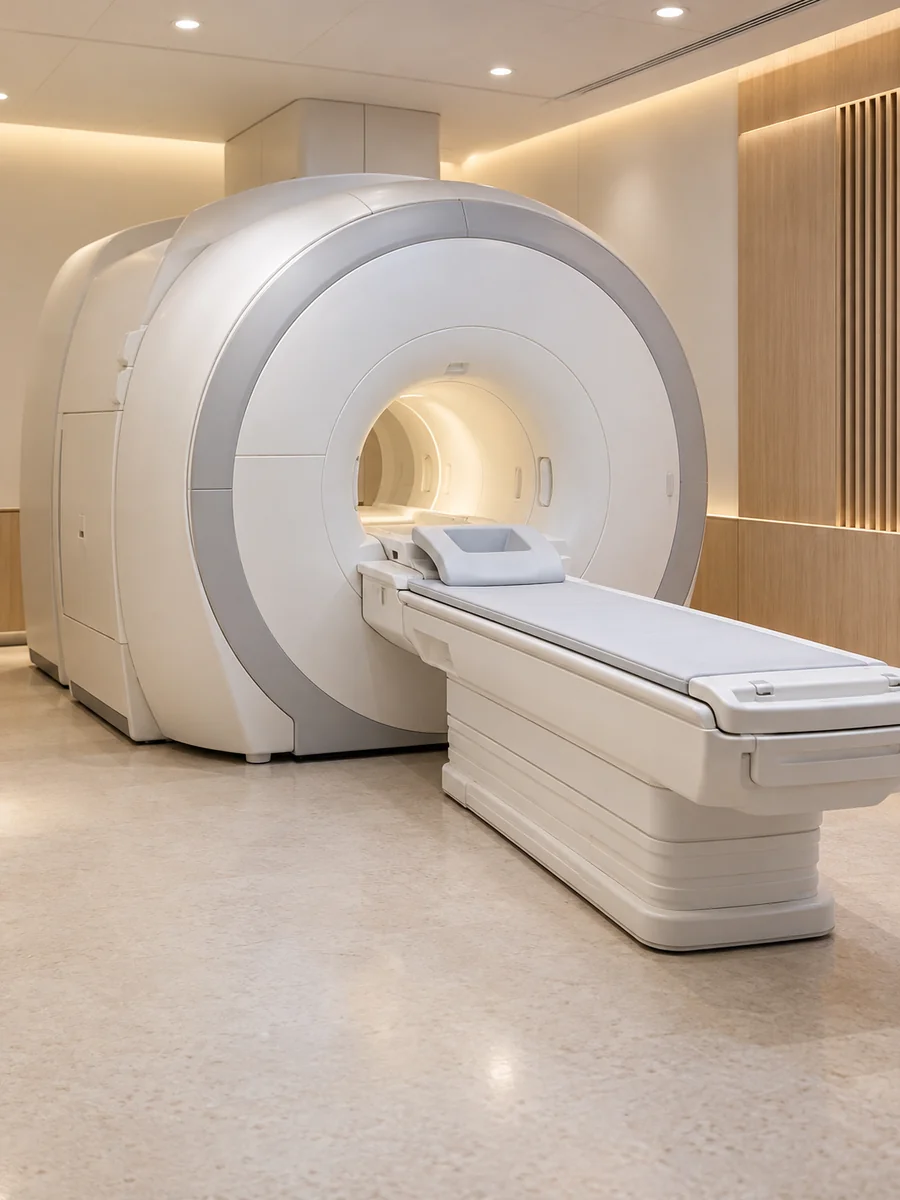
MRI forms images using strong magnetic fields and radiofrequency signals rather than X-rays. It is used for the brain, spine, joints and many soft tissues. No ionizing radiation does not mean no preparation: magnetic fields can affect some implanted devices and attract certain metal objects.
Disclose pacemakers, cochlear implants, other devices and possible metal fragments, and provide device details when available. The imaging team determines compatibility and required precautions. Do not assume every implant prevents MRI or that an old implant is irrelevant. Discuss claustrophobia or difficulty remaining still before the appointment.
Sources: [2] RadiologyInfo.org — ACR and RSNA
Ultrasound: real-time views with practical limitations
Ultrasound uses sound waves to create real-time images without ionizing radiation. It can assess many abdominal organs, the thyroid and other structures. Doppler techniques add information about blood flow, while echocardiography examines the heart. A lower price does not make it an inferior choice for every clinical question.
Air and bone limit the passage of sound waves, and depth can affect image quality. An abdominal ultrasound therefore cannot rule out every bowel, lung or bone problem. Preparation varies by examination; ask whether fasting or drinking water is required for the specific area being assessed.
Sources: [3] RadiologyInfo.org — ACR and RSNA
Contrast is a clinical choice, not an automatic upgrade
Contrast materials help distinguish selected tissues or vessels from their surroundings. CT and MRI do not generally use the same contrast agents, and not every examination requires them. The choice depends on the information needed, rather than an assumption that an enhanced study is always more comprehensive.
Describe previous contrast reactions, kidney problems, medicines and possible pregnancy before the examination. The team can determine whether additional assessment or a modified plan is needed. Sharing the details of a previous reaction is more useful than making your own decision from a vague allergy label.
Sources: [4] RadiologyInfo.org — ACR and RSNA
Ask what the result will change
A whole-body scan is not a certificate that every disease has been excluded. The American College of Radiology's statement on total-body MRI screening notes insufficient evidence for routine use in people without relevant symptoms, risk factors or suggestive family history, and warns about nonspecific findings leading to unnecessary follow-up.
That is a distinction between a useful clinical test and a universal screening strategy, not a rejection of MRI. Ask why this modality fits your situation, what alternatives exist and how either an abnormal or reassuring result would influence the next step.
Sources: [5] American College of Radiology